Showing posts with label Environmental. Show all posts

Tuesday, September 20, 2022

Dangers of CO (Carbon Monoxide) and the Effects of CO in the Air

                             Carbon Monoxide


What is Carbon Monoxide?..

Carbon monoxide, or “CO,” is an odourless, colourless gas that can kill you. CO in the environment can have a devastating effect on human health. For most of us it would be the most dangerous gas we might ever experience. It is often referred to as the ‘hidden gas’ because it is very hard to detect. However, the effects of CO are quite dramatic and in high concentrations it will kill within a few minutes.

When we breathe, our lungs absorb oxygen. However, CO is absorbed more readily into the blood stream than oxygen and when our haemoglobin, or red blood cells, become saturated with CO, no oxygen can be absorbed. One of the functions of oxygen is to remove waste matter from our tissues, so without oxygen our blood rapidly become poisoned. 


What percentage of CO can be harmful and what percentage can kill us?

CO in air  -  0.01%

Saturation of CO in blood  - 0–15%

Effects of CO in adults - Slight headache after 2–3 hours  


CO in air  -  0.15% - 0.3%

Saturation of CO in blood - 50–55%- 55-65%

Effects of CO in adults - Severe headache, nausea, and dizziness within 10 minutes; increased breathing and convulsions, leading to collapse, possible death after 15 minutes.


Yellow flames coming out from gas appliances is a sign that your appliance isn't burning correctly and efficiently. Thus, its important to keep your appliance in good health by servicing it regularly. 


Friday, September 9, 2022

What distinguishes LPG from other members of the family of petroleum hydrocarbons is.. Part 3

                                   Kerosene


Kerosene oil is a flammable liquid which is used in many industries and homes around the world as a fuel for light, heat and power. It is generally non-viscous and clear, however viscous substances such as wax and other thicker substances can be made from kerosene.


The chemical composition of kerosene is fairly complex, and it is a complex mixture of paraffins (55.2%), naphthene's (40.9%), and aromatic hydrocarbons (3.9%). Kerosene tends to contain hydrocarbons that have anywhere from 11 to 13 carbons in the chains. Liquid kerosene fuels contain potentially harmful compounds, including hexane and benzene.


Kerosene is widely used to power jet engines of aircraft (jet fuel), as well as some rocket engines in a highly refined form called RP-1. It is also commonly used as a cooking and lighting fuel, and for fire toys such as poi. In parts of Asia, kerosene is sometimes used as fuel for small outboard motors or even motorcycles.


In developing countries, the widespread use of kerosene comes with numerous different issues. Hazards of kerosene use include poisoning, fires, and explosions. As well, some kerosene lamps emit fine particulates, carbon monoxide, nitric oxides (NOx), and sulfur dioxide when burned. These by-products may reduce lung function and increase risks of asthma and cancer. Taking into account the risks of using kerosene, cleaner alternatives to kerosene technologies for lighting and cooking should be investigated - although kerosene is still a safer option in many cases than using solid fuels.

Thursday, September 1, 2022

What distinguishes LPG from other members of the family of petroleum hydrocarbons - Part 1

                     Liquified Petroleum Gas


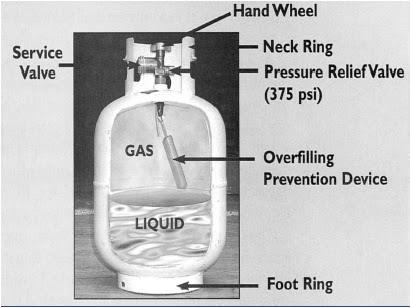
 LPG: is a petroleum hydrocarbon which is a liquid when stored under moderate pressures and a gas when released at normal ambient temperatures. It is inherently safe, and is generally only dangerous if it is escaping. Its vapor pressure increases rapidly as the temperature increases. When the gas is released to atmosphere at ordinary temperatures, it expands rapidly.


It is heavier than air and care needs to be taken not to allow leaks where significant amounts of gas is going to accumulate. Within the flammable limits of LP-gases, a single spark can easily ignite the product. Because it is odourless, approved odorants must be added. Finally, LP-gases are considered non-toxic. However, in confined spaces LP-gases can displace oxygen. Due to decreased levels of oxygen, this condition can cause unconsciousness or death.     


Saturday, April 16, 2022

Green Living with LPG


Green Living with LPG.


The world is moving towards a greener future with businesses and every day civilians becoming more self-aware of their carbon footprint.

These days people are opting for more environmentally friendly alternatives in their daily practices. Single-use plastics are being phased out for reusable alternatives, plant-based foods are becoming more popular by the day and alternative energy sources are being seen more frequently.

LPG is Liquified Petroleum Gas, also referred to as LP Gas or propane. It is a mixture of natural gas and propane. It is a portable, clean and efficient energy source that has many applications and is readily available world-wide. 

It's carbon footprint is 50% less lower than coal and produces virtually no particulate matter or soot when burned making it a clean-burning energy source. LPG is the perfect back-up fuel to use in conjunction with other eco-friendly alternatives such as solar power.

LPG can make daily life more convenient in the following ways:
- Gas Heaters used to heat your home and office.
- Gas Geysers used to heat water instantly.
- Gas Braais provide a stable heat when braaiing with very little cleaning afterwards.
- Gas stoves & hobs used for indoor cooking.
- Gas fireplaces used for indoor and outdoor heating.

LPG is even used to fuel vehicles. A simple, inexpensive conversion can be done so that your car can run on Autogas, making your vehicle duel-fuel. Your car will be able to alternate between using Autogas and petrol or diesel.

Once again, Autogas is a more eco-friendly vehicle fuel as it produces 96% less carbon emissions than diesel and 68% less than petrol.

With increasing electricity prices in South Africa and more load-shedding being implemented every year, #LPG is a great alternative fuel to use at home.

Hobs - Did you know?

T he hob is used for boiling, frying, steaming, simmering and braising. I t  primarily works by the conduction of heat from the flame throug...